What financial statements does a lender want from a small business?
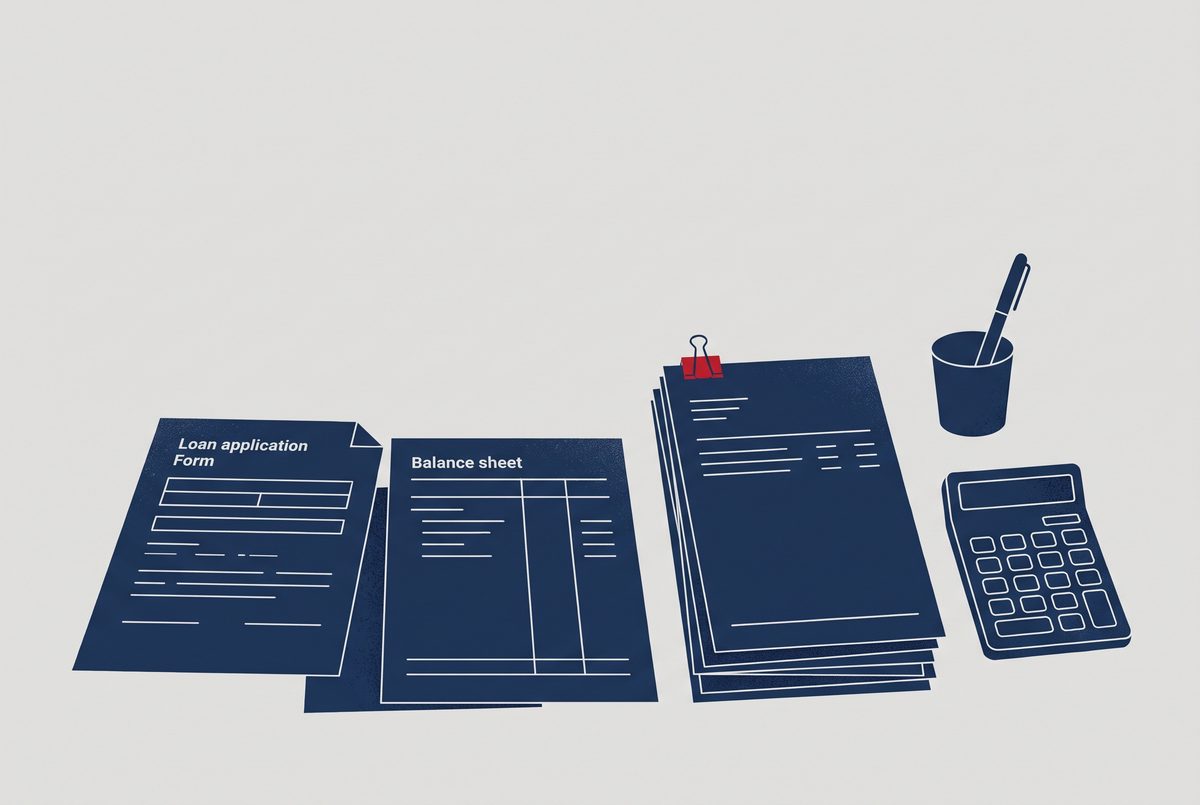
Start with a profit and loss statement and a balance sheet. Beyond that, the list depends on the lender and the loan. The SBA's 7(a) loans page says the contents of the application vary depending on the size of the loan and the lender's processing method, and that your lender will help you work out which documents you need.
The SBA and IRS wording here was checked in November 2026. Forms change, so your lender's own checklist is the final word.
What does each document show?
Each one answers a different question, and each one has to come out of your books. IRS Publication 583 says good records let you prepare financial statements that can help you in dealing with your bank or creditors.
| Document | What it shows | Where it's named |
|---|---|---|
| Income statement (profit and loss) | Income and expenses for a period of time | IRS Publication 583 |
| Balance sheet | Assets, liabilities and owner equity on a given date | IRS Publication 583 |
| Cash flow statement | Cash coming in and going out of the business | SBA business plan guidance (as a document to include) |
| Receivable and payable agings | Who owes you, who you owe, and how long each has been open | SBA 7(a) loans page (Working Capital Pilot section) |
| Personal financial statement (SBA Form 413) | The owner's own finances | SBA Form 413 page |
For an established business asking for funding, the SBA's business plan guidance says to include income statements, balance sheets and cash flow statements for the last three to five years, along with forecasts that match the amount requested. The SBA's Form 413 page says the personal financial statement is used to assess repayment ability and creditworthiness for 7(a), 504 and disaster loans, among other programs.
Are your books ready, or do you need to catch up first?
Find the row that matches your file today, not the way you meant to keep it.
| Your situation | What to do first | Why |
|---|---|---|
| Every account reconciled through last month | Run the statements and call the lender | The figures already agree with the bank |
| Current, but personal and business spending mixed | Clean up the categories before you print anything | Personal charges change the profit a lender sees |
| Several months never reconciled | Catch up the missing months first | A balance sheet from unreconciled months may not match the bank |
| Nothing kept beyond the bank account and receipts | Rebuild the year, then set up a system | There is nothing yet to print statements from |
| Asking for a line of credit against receivables | Check you can print accurate agings | The SBA names agings for its Working Capital Pilot line |
What if your books are already current?
Then the job is printing and checking. Run the profit and loss for the periods the lender wants and a balance sheet as of the last reconciled month, then read them as a stranger would. An owner loan sitting in income is easier to fix now than to explain later.
What if personal and business money are mixed?
Separate them first. Publication 583 says you should keep your business account separate from your personal checking account. If the business account paid for groceries, those entries need recoding so the profit on the statement is the business's profit.
What if you're months behind?
Catch up before you apply. Publication 583 says you should reconcile your checking account each month, and that reconciling is how you verify the balance and correct errors. Skip it for six months and the cash on your balance sheet is a guess. Catch-up bookkeeping reconciles the past periods and corrects errors first, so the statements you hand over are built on months that match the bank.
How can you tell your books aren't loan-ready?
Open the file and look at the last month that was reconciled. If it's more than a month or two old, start there. Other signs are a cash balance that doesn't match the bank statement, invoices still showing as unpaid after the customer paid, owner draws booked as expenses, and equipment bought on a card that only ever appears as an expense.
Clean books won't win the loan by themselves. The same SBA business plan guidance says poor credit history is one of the main reasons small business loan applications are often declined, and its 7(a) page says a borrower must be creditworthy and show a reasonable ability to repay. Good books just mean the numbers you hand over are true.
Applying for a loan soon?
Call TrustBooks Bookkeeping in Warren for a free consultation on getting your books current first.
What's different for a Madison Heights business?
Madison Heights is a city of 28,468 people (2020 census) in Oakland County, per Wikipedia's Madison Heights entry. Its eastern edge, Dequindre Road, is also the line between Oakland and Macomb counties. Warren sits on the other side. The same entry says that although most of its buildings are homes, 60% of the tax base comes from light industrial or commercial property. A shop with equipment, vendor bills and customer invoices has more on its balance sheet to get right.
Borrowing to buy a business here brings city paperwork too. The SBA lists changes of ownership among the uses of a 7(a) loan. The city's Certificate of Occupancy application says a change of name or ownership of an existing business generally needs a new certificate. Existing certificates expire immediately on a change of ownership. Every business in the city also needs a business license, filed with the Clerk's office. Build that timing into your plan. See what bookkeeping for Madison Heights businesses covers.
How far back do your books need to go?
As far back as the lender asks. Publication 583 warns that creditors may require you to keep records longer than the IRS does, so check before you throw out records you no longer need for tax purposes. If a lender asks for tax returns, ask your tax professional about them.
How does TrustBooks help you get ready?
TrustBooks offers catch-up and clean-up for the months that fell behind, then monthly bookkeeping covering transaction categorization, bank and credit card reconciliation, accounts payable and receivable, and monthly financial statements and reports. It also offers QuickBooks setup. It doesn't make lending decisions or promise a loan outcome. TrustBooks is based in Warren, which borders Madison Heights along Dequindre Road, and you get direct access to your bookkeeper, Vince. Call (586) 863-6663 or use the contact form to book a free consultation. TrustBooks says it will get back to you within 24 hours.